What life with an equestrian property involves
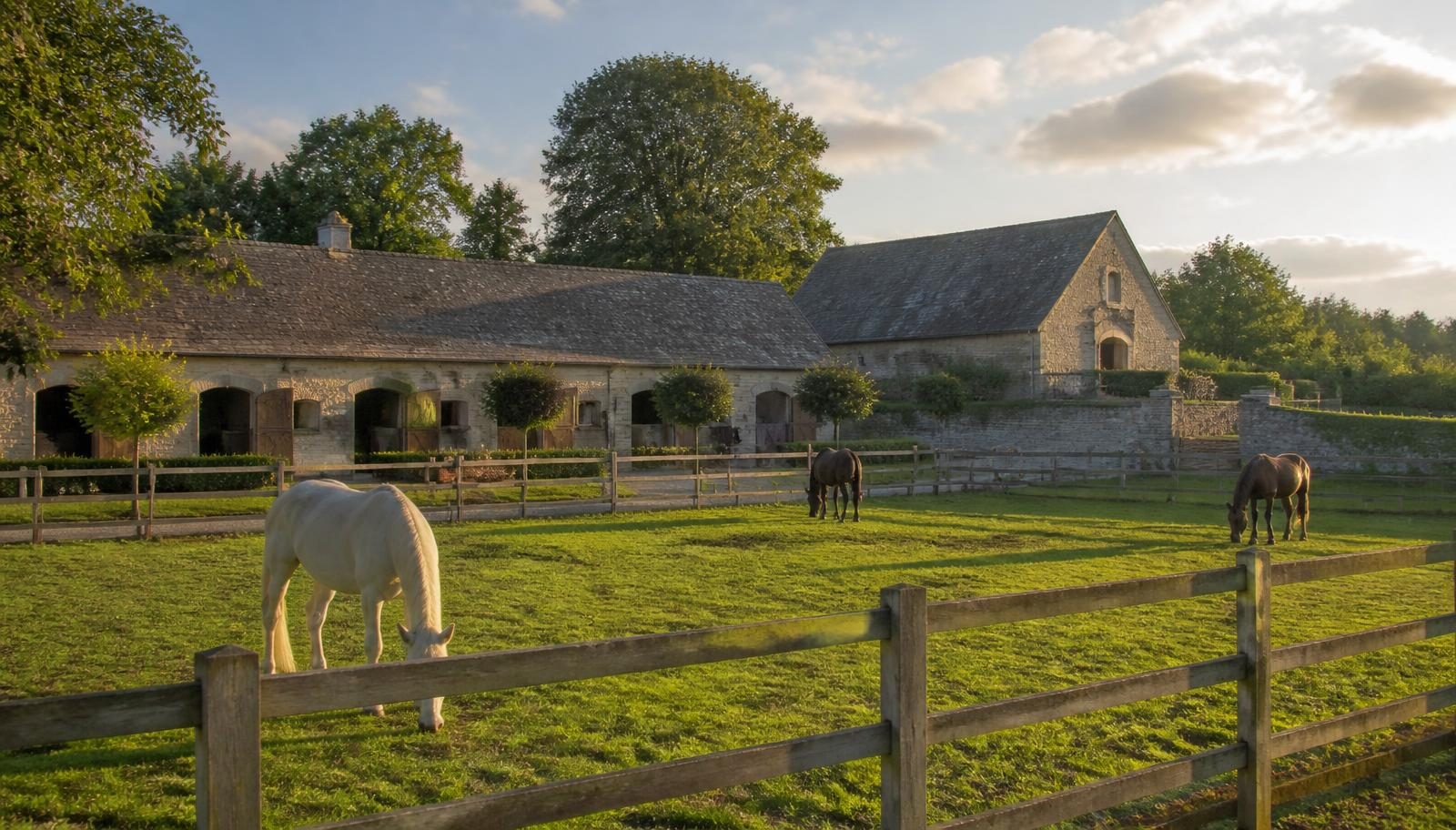
Horses at home mean early starts, late checks and a yard routine that runs every day of the year. The reward is immediate access — riding straight from the yard, watching your horses out of the kitchen window, and controlling their care entirely.
The trade-off is that you are now the yard manager: mucking out, feeding, turnout, grazing rotation, repairs, muck removal and cover for holidays all fall to you.
Stables
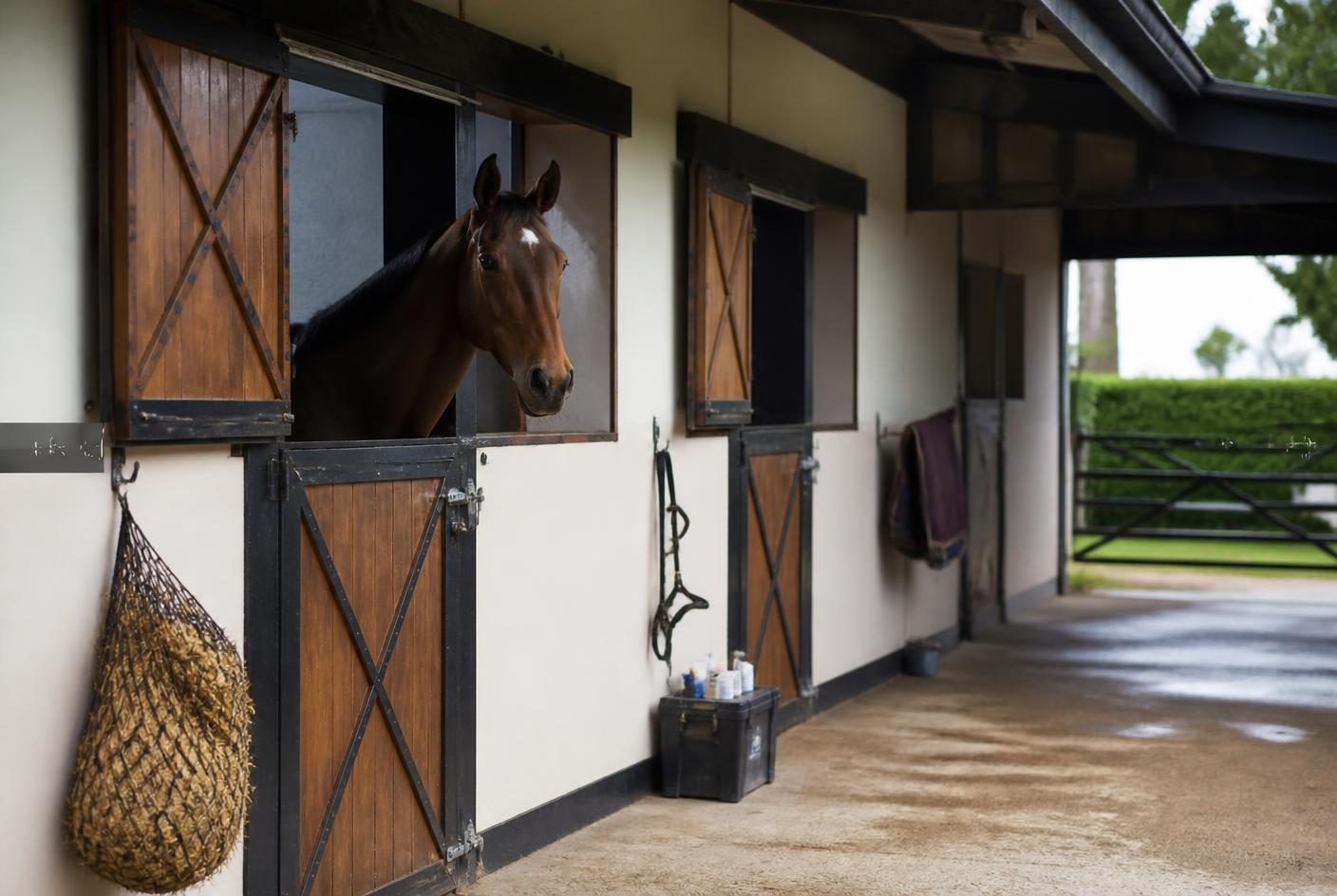
Good stabling is roomy, well ventilated without draughts, well lit and safe. Look for solid dividing walls, kick boards, non-slip floors, sensible drainage and doors that open fully and latch securely.
A hard-standing yard that drains properly, with room to turn a trailer or lorry, matters as much as the boxes themselves. Check the electricity supply, water points and whether there is a safe place to tie up and groom under cover.
Paddocks and grazing
Several smaller paddocks are far more useful than one large field, because they allow rotation, resting and separating horses. Look for good drainage, absence of poisonous plants such as ragwort and sycamore seedlings, and shelter from prevailing wind.
Consider whether the grazing is too rich for native types, whether a track system or a restricted turnout area is feasible, and how the ground behaves in a wet winter.
Buying extra grazing separately is common — our guide to buying land.
Arenas
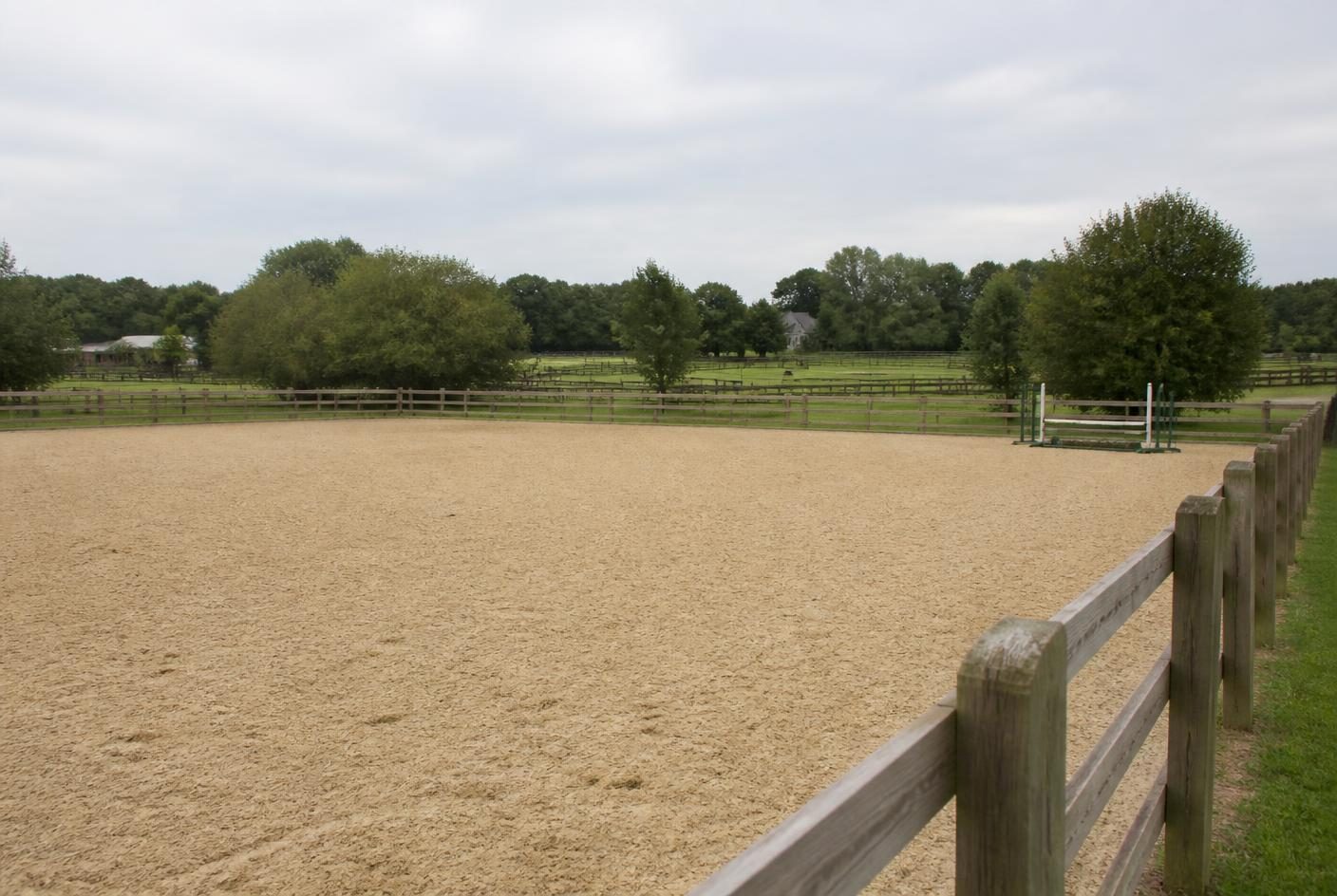
An arena transforms year-round usability. Assess size for your discipline, the base construction and drainage rather than just the surface, whether it is level, and how well the surface is maintained.
Check whether the arena has planning permission, and whether any lighting has consent. Ask when the surface was last topped up and how it rides in heavy rain and frost.
Horse-safe fencing
Post-and-rail with an electric top line is the standard for horses; stud rail and well-maintained hedges work well too. Barbed wire, loose sheep netting and low gateways are the common hazards on properties that were not previously equestrian.
Walk every boundary looking for protruding nails, gaps, unsafe gate fastenings and awkward corners where a horse can be trapped.
Tack rooms, storage and field shelters
A dry, secure, insulated tack room with power protects expensive equipment and keeps leather in good condition. Separate storage for hay, bedding and feed reduces fire risk and vermin problems.
Field shelters give horses year-round protection and can reduce stabling needs; check that any shelter is stable, safe and, where relevant, has the correct planning status.
Water and services
Automatic troughs in each paddock and taps in the yard save hours every week. Establish the supply type, whether pipes are frost-protected, and where isolation valves are.
Confirm electricity to stables and arena, lighting for winter, and drainage from the yard and muck area so run-off does not enter a watercourse.
Muck management
Muck is a genuine planning and practical issue. You need a suitable, contained store sited away from watercourses and neighbours, with vehicle access for removal.
Ask how muck is currently dealt with — collection, spreading on the land, or composting — and what it costs, because it is a recurring expense that surprises new owners.
Riding access
Hacking straight from the yard is one of the most valuable and least replaceable features of any horse property. Check bridleways, byways and permissive routes on the ground rather than only on a map.
Consider road safety at the exit, traffic speed on nearby lanes, and distance to arenas, gallops, competition venues, a good farrier and an equine vet.
Land requirements and maintenance
As a broad guide, horses need enough grazing to allow rotation and rest rather than a fixed acreage, and heavier horses or wetter ground need more. Small acreages can work with careful management, hard standing and bought-in forage.
Annual maintenance includes topping, harrowing, weed control, poo picking, fencing repairs, arena upkeep and track maintenance. Equipment such as a quad or compact tractor with a topper and harrow quickly pays for itself.
Many horse owners keep a few other animals too, which is the territory of smallholding life.
What to consider when buying an equestrian property
Before offering on a horse property, confirm the details that are expensive or impossible to change.
Planning status
Establish whether stables, arena, shelters and any change of land use from agricultural to equestrian have the necessary consents.
Access for lorries
Check the lane, entrance and yard can take a horsebox, feed delivery and a vet's vehicle in winter.
Commercial use
If you intend livery, lessons or breeding, confirm what is permitted and what insurance and consents are required.
Ground and drainage
Visit after heavy rain — winter turnout is the real test of any equestrian property.
Running costs
Budget for bedding, forage, farriery, vet care, muck removal, insurance and arena maintenance.